As Mohamed Fayaz, a Maldives travel expert with over 15 years and 40+ visited resorts and local islands under my belt, I've witnessed the incredible transformation and enduring magic of this underwater paradise. The Maldives isn't just a destination; it's an immersive experience where vibrant coral reefs teem with life, and encounters with magnificent pelagic creatures become everyday occurrences. Whether you're a seasoned diver chasing whale sharks or a first-time snorkeler hoping to spot a reef shark from your overwater villa, this guide for 2026 will navigate you through everything you need to know to plan your ultimate Maldivian diving and snorkeling adventure.
In This Guide
Diving & Snorkeling in the Maldives: An Overview
The Maldives, a scattered necklace of 26 natural atolls and over 1,000 coral islands, sits proudly in the heart of the Indian Ocean, offering unparalleled access to a thriving marine ecosystem. The unique geography of these atolls, with their deep channels, thilas (underwater pinnacles), and extensive house reefs, creates a diverse range of habitats for an astonishing array of marine life. From the moment you dip your toes into the impossibly clear turquoise lagoons, you'll understand why this destination is consistently ranked among the world's best for underwater exploration.
I’ve spent countless hours exploring these waters, and the sheer biodiversity never ceases to amaze me. The warm, stable water temperatures, typically around 28-30°C (82-86°F) year-round, make for comfortable diving and snorkeling without the need for thick wetsuits. Expect visibility that often exceeds 30 meters, allowing for breathtaking views of vibrant coral gardens, busy cleaning stations, and the majestic pelagic life that cruises through the channels. Whether you’re a beginner or an experienced diver, the Maldives offers a spectrum of experiences, from tranquil lagoon snorkeling to exhilarating drift dives with strong currents.
Why the Maldives is a Diver's Paradise
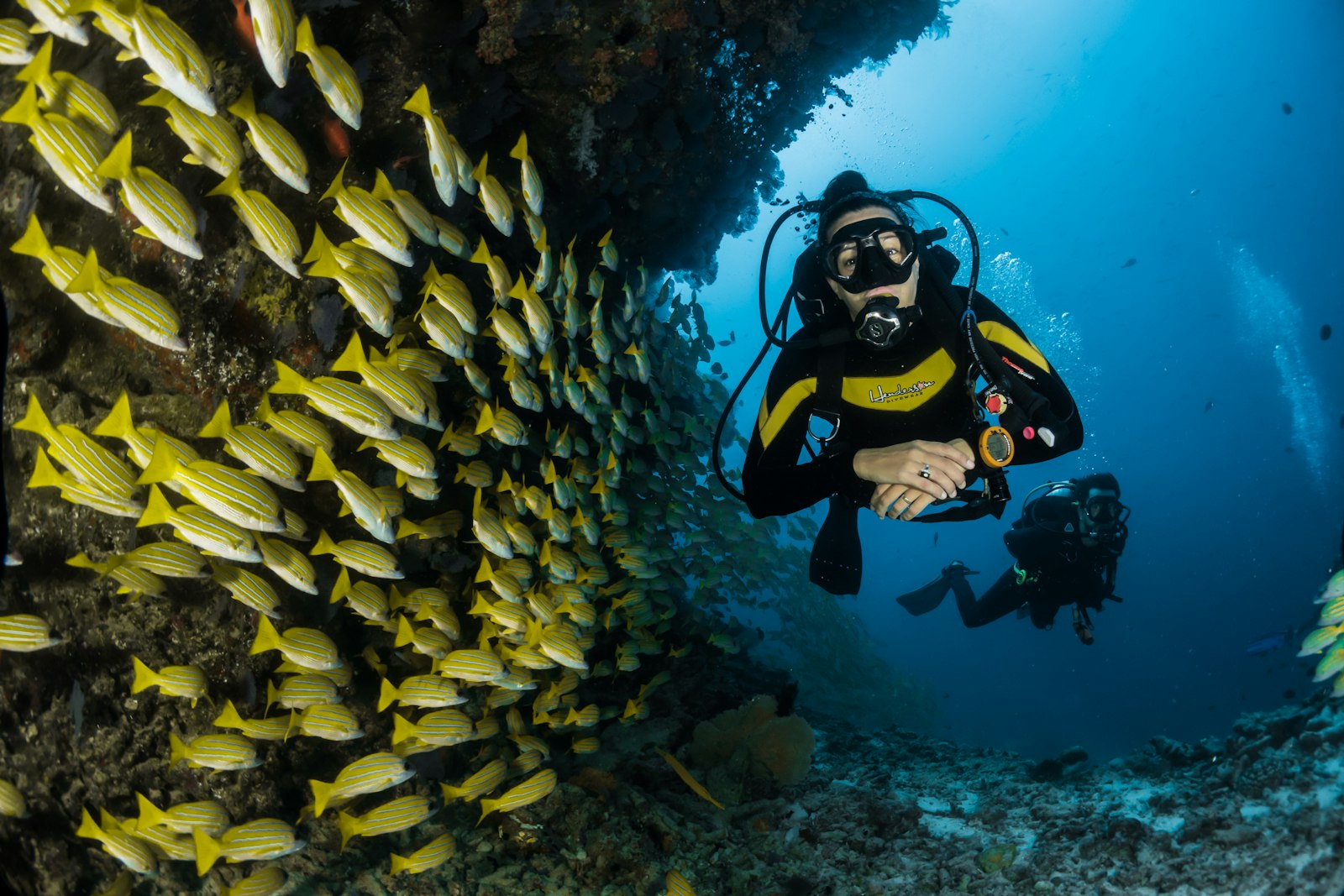
My 15 years of exploring the Maldives have solidified its reputation as a diver's ultimate playground. What truly sets it apart is the sheer abundance and diversity of marine life, coupled with pristine conditions. You're not just seeing fish here; you're immersed in a bustling underwater metropolis. I’ve personally witnessed entire schools of snapper and barracuda swirling in unison, graceful manta rays performing their hypnotic ballet at cleaning stations, and the awe-inspiring presence of whale sharks gliding effortlessly through the blue.
The coral reefs, though impacted in some areas by past bleaching events, are showing remarkable resilience, with many resorts and conservation groups actively engaged in restoration efforts. The commitment to marine conservation, which I’ve seen grow significantly over the years, ensures that these precious ecosystems are protected for future generations. Furthermore, the Maldivian government has designated numerous Marine Protected Areas (MPAs) across the atolls, safeguarding critical habitats and fostering healthy marine populations.
Pro Tip
Don't underestimate the power of a good house reef! Many resorts boast incredible house reefs accessible directly from the beach or your villa, offering world-class snorkeling and even diving opportunities at your leisure. I've snorkeled some of these reefs dozens of times, and each visit reveals something new.
Getting Certified: PADI & SSI in the Maldives
Dreaming of diving deeper than a snorkel allows? The Maldives is an exceptional place to earn your scuba diving certification. Most resorts and local islands host PADI (Professional Association of Diving Instructors) or SSI (Scuba Schools International) dive centers, offering a full range of courses from beginner to professional levels. The calm, clear, and warm waters provide an ideal learning environment, making your initial dives a truly enjoyable experience.
Courses & Costs (2026)
For aspiring divers, the PADI Open Water Diver certification is your gateway to the underwater world. This course typically takes 3-4 days and combines theory, confined water skills, and four open water dives. As of 2026, you can expect the cost for a PADI Open Water Diver course at a resort in the Maldives to range from approximately $700 to $1,200 USD, including equipment rental, study materials, and certification fees.
If you're short on time, consider the PADI Scuba Diver course, which is a subset of the Open Water, allowing you to dive under direct supervision. This usually costs around $500-$750 USD. For those already certified, continuing education courses like Advanced Open Water Diver (approx. $600-$1,000 USD) or specialty courses (e.g., Enriched Air Diver, Night Diver, Wreck Diver) are readily available.
For a taste of diving without committing to a full course, the Discover Scuba Diving (DSD) experience is perfect. It involves a brief theory session, some basic skills in shallow water, and then a guided dive with an instructor. Prices for a DSD typically range from $150 to $250 USD for a single dive.
Choosing a Dive Center
When selecting a dive center, I always recommend looking for a PADI 5-Star Dive Center or an equivalent SSI Diamond Dive Center. These designations indicate high standards of safety, professionalism, and environmental awareness. Many resorts, like Baros Maldives, boast long-standing, reputable dive centers with multilingual instructors and a deep knowledge of local dive sites.
On my last visit to South Ari Atoll, I observed the Euro-Divers at LUX South Ari Atoll Resort & Villas, which is a PADI 5-Star dive centre, providing excellent instruction and access to fantastic dive sites. Always check online reviews and don't hesitate to ask about instructor-to-student ratios, equipment maintenance, and their commitment to marine conservation.
Best Atolls for Diving & Snorkeling
The Maldives is a vast archipelago, and each atoll offers unique underwater experiences. Based on my extensive travels, here are the atolls that consistently deliver exceptional diving and snorkeling:
South Ari Atoll: The Whale Shark Kingdom
South Ari Atoll (Alifu Dhaalu Atoll) is, without a doubt, the Maldives' premier destination for whale shark encounters. It's one of the few places in the world where these gentle giants can be sighted year-round, particularly within the South Ari Marine Protected Area (SAMPA) near Maamigili and Dhigurah.
On my last visit to South Ari, I spent a week on a liveaboard specifically targeting whale sharks, and we had multiple sightings. The nutrient-rich waters here attract a persistent aggregation of mostly juvenile male whale sharks, making encounters highly probable. Beyond whale sharks, South Ari offers incredible thilas and channels teeming with reef sharks, eagle rays, and vibrant coral formations. Resorts like LUX South Ari Atoll and Vilamendhoo are excellent bases for exploring this area.
Transfer to South Ari Atoll is typically by seaplane (25-30 minutes from Malé, often included in luxury resort packages) or domestic flight to Maamigili Airport (approx. 20 minutes from Malé, costing around $150-200 USD round-trip, followed by a speedboat transfer).
Baa Atoll: Manta Ray Hotspot and UNESCO Biosphere Reserve
Baa Atoll is globally renowned, especially for Hanifaru Bay, a UNESCO Biosphere Reserve. This unique bay becomes a feeding frenzy for hundreds of manta rays and sometimes whale sharks during the southwest monsoon (May to November), when plankton concentrations reach their peak.
I've had the privilege of snorkeling in Hanifaru Bay during peak season, and it's an experience that transcends words – hundreds of mantas performing "cyclone feeding" is a sight you'll never forget. While diving is restricted within Hanifaru Bay itself (only snorkeling is permitted to protect the animals), the surrounding reefs of Baa Atoll offer fantastic diving opportunities with mantas at cleaning stations and diverse reef life. Resorts like Anantara Kihavah Maldives Villas are ideally situated for Hanifaru Bay excursions.
Getting to Baa Atoll usually involves a scenic seaplane flight, typically around 30-45 minutes from Velana International Airport (Malé). Prices vary but can be around $300-$500 USD return. Learn more about Baa Atoll.
North Malé Atoll: Accessibility and Classic Sites
North Malé Atoll, being closest to the capital and international airport, offers excellent accessibility and a wealth of classic dive sites. It's home to famous spots like Banana Reef, one of the oldest and most well-known dive sites in the Maldives, featuring vibrant corals, caves, and a variety of reef fish, sharks, and stingrays.
Lankan Manta Point is another highlight, a renowned cleaning station where manta rays congregate, especially during the southwest monsoon (May to November). For snorkelers, Rasfari North is a shallow reef frequently visited by mantas during the northeast monsoon (December to April). North Malé Atoll also boasts several fascinating wreck dives. Resorts like Baros Maldives and many others offer easy access to these sites.
Transfers to resorts in North Malé Atoll are typically by speedboat, ranging from 15 to 45 minutes, with costs varying widely depending on the resort, often included in luxury packages. For local islands, public ferries are an option, but speedboats are faster and more common for tourists. Explore more about North Malé Atoll.
Addu Atoll: Southern Charms and Year-Round Mantas
Located in the far south, crossing the equator, Addu Atoll (Seenu Atoll) offers a unique Maldivian diving experience. It's known for its year-round manta ray sightings at specific cleaning stations, a rarity in the Maldives. The atoll also features the British Loyalty wreck, one of the largest shipwrecks in the Maldives, teeming with marine life.
Addu's reefs are generally considered more robust and less affected by bleaching events than some northern atolls, offering pristine coral gardens. The local culture here is also distinct, providing a different perspective on Maldivian life. While I haven't visited Addu as frequently as the central atolls, my dives there have always been memorable for the sheer size of the mantas and the unique historical wreck.
Other Notable Atolls
- Vaavu Atoll: Famous for its exhilarating channel dives, particularly Fotteyo Kandu, often cited as one of the best dive sites in the world. Expect strong currents, grey reef sharks, eagle rays, and schools of fusiliers. It's also known for night dives with nurse sharks at Alimatha House Reef.
- Lhaviyani Atoll: Offers stunning and pristine snorkeling and diving spots, with regular sightings of reef sharks, eagle rays, and sea turtles. Sirru Fen Fushi Private Lagoon Resort's house reef is particularly known for manta ray encounters from December to April.
- Rasdhoo Atoll: Known for hammerhead shark encounters at Hammerhead Point, an early morning dive for experienced divers.
Maldives Diving & Snorkeling Seasons 2026
The Maldives experiences two main monsoon seasons, which influence currents, visibility, and the movement of marine life. Understanding these patterns is key to planning your trip for specific encounters.
Northeast Monsoon (Dry Season: December to April)
This is generally considered the peak tourist season due to calmer seas, lower humidity, and excellent visibility, often exceeding 30 meters. During this period, the prevailing winds push plankton to the eastern sides of the atolls, meaning large filter feeders like manta rays and whale sharks are more commonly found on the western sides of the atolls.
- Whale Sharks: Consistent sightings in South Ari Atoll, with larger congregations often observed from December to March.
- Manta Rays: Found on the western sides of atolls, including South Ari Atoll and Rasfari North in North Malé Atoll.
- Visibility: Generally at its best, making it ideal for photography and experiencing the vibrant coral reefs.
Southwest Monsoon (Wet Season: May to November)
While this is the "wet season," don't let the name deter you. Rainfall typically comes in short, heavy bursts, often followed by sunshine. The beauty of this season for divers is that the prevailing winds shift, pushing plankton to the eastern sides of the atolls.
- Manta Rays: This is prime time for spectacular manta ray aggregations, especially at Hanifaru Bay in Baa Atoll (May to November) and Lankan Manta Point in North Malé Atoll (May to November).
- Whale Sharks: Frequent sightings in South Ari Atoll (especially around Dhigurah) and also possible in Hanifaru Bay during peak manta season.
- Visibility: Can be slightly reduced due to the plankton blooms, but this is precisely what attracts the large filter feeders, making the trade-off well worth it for those seeking these encounters.
In essence, the Maldives offers year-round opportunities for incredible marine encounters. The "best" season truly depends on what specific marine life you hope to see and whether you prioritize crystal-clear visibility or the thrill of large animal aggregations.
Essential Equipment for Your Maldives Dive Trip
Packing for a Maldives dive or snorkel trip is relatively straightforward, but a few key items will enhance your experience. Having visited so many times, I’ve refined my packing list to ensure comfort and readiness for anything the ocean offers.
- Mask, Snorkel, and Fins: While resorts offer rentals, having your own well-fitting mask and snorkel is crucial for comfort and preventing leaks. Good quality fins (full foot or open heel with booties) will make a difference in your propulsion and energy conservation.
- Wetsuit/Rash Guard: The water is warm, but a 3mm shorty wetsuit provides thermal protection on longer dives and protects against minor scrapes or sun exposure. For snorkelers, a good quality rash guard is essential for sun protection.
- Dive Computer: If you're a certified diver, your own dive computer is a must for managing your dive profile and ensuring safety. Rental computers are available but having your own is always best.
- Reef-Safe Sunscreen: This is non-negotiable. Protect yourself and the delicate coral reefs. Look for sunscreens free of oxybenzone and octinoxate.
- Underwater Camera: You'll want to capture the magic! From basic waterproof point-and-shoots to advanced DSLR setups, choose what fits your budget and skill level.
- SMB (Surface Marker Buoy) & Whistle: Essential safety equipment for divers, especially in areas with currents or boat traffic.
Rental vs. Own Equipment (2026)
Most resorts and liveaboards offer high-quality rental equipment. However, owning your mask, snorkel, fins, and dive computer is always my recommendation for comfort and familiarity. For BCDs and regulators, renting is often a convenient option, especially if you're traveling light.
As of 2026, typical rental costs per dive for individual items at resorts might be:
- BCD: $8 - $10 USD
- Regulator: $9 - $10 USD
- Wetsuit: $7 - $8 USD
- Dive Computer: $7 - $8 USD
Resort Diving vs. Liveaboard: Choosing Your Adventure
This is a perennial question for divers visiting the Maldives, and my answer often depends on your priorities and budget. I've experienced both extensively, and each offers a distinct adventure.
Resort-Based Diving & Snorkeling
Staying at a resort offers comfort, luxury, and a wide array of amenities beyond diving. Many resorts boast incredible house reefs, allowing for unlimited, easy access to snorkeling and shore diving.
Pros:
- Comfort & Amenities: Spas, multiple restaurants, bars, land sports, and luxurious accommodations.
- House Reef Access: Unlimited snorkeling and often shore diving directly from your villa or the beach.
- Family-Friendly: More options for non-diving partners or children with kids' clubs and various activities.
- Flexibility: You set your schedule; dive when you want, or simply relax.
- Limited Dive Site Access: Day boats can only reach sites within a certain radius, often missing more remote or renowned spots.
- Cost Per Dive: Individual boat dives can be more expensive than on a liveaboard. A single boat dive (excluding equipment and boat fees) can range from $90-$170 USD per dive, plus additional boat fees of around $16-$30 USD per trip.
- Less Dive-Focused: While diving is excellent, it's one of many activities, not the sole focus.
For example, at Baros Maldives, a single certified dive is around $136 USD, with boat fees at $16 USD per dive. LUX South Ari Atoll charges around $120 USD per single tank dive, with boat trips extra. Soneva Jani prices a single tank dive at $115 USD, plus a $30 USD boat trip supplement.
Book Baros Maldives
Check Best Prices →Liveaboard Diving
Liveaboards are purpose-built dive boats that take you to the best dive sites across multiple atolls, offering a truly immersive diving experience.
Pros:
- Maximum Dives & Site Variety: Typically 3-4 dives per day, accessing remote and famous sites that resorts can't reach.
- All-Inclusive Value: Meals, accommodation, and often multiple dives per day are included in the package price, making the cost per dive significantly lower.
- Focus on Diving: The entire trip revolves around diving, perfect for serious enthusiasts.
- Community: Great for solo travelers or those looking to connect with like-minded divers.
- Less Non-Diving Activities: Limited options for non-divers or those who want a break from the water.
- Cabin Size: Cabins are comfortable but generally smaller than resort rooms.
- Motion Sickness: Can be a factor for some, especially during open-ocean crossings.
As of 2026, a 7-day liveaboard trip can range from $2,000 to $4,500 USD per person, including accommodation, all meals, and typically 3-4 dives per day. Premium liveaboards might be $250-$450 USD per person per day. Remember to factor in additional costs like international airfare, Maldivian GST (17%), green fees ($12 USD per person per night), and service charges (10%) for liveaboards.
Pro Tip
Consider a "twin-center" trip: a few nights on a liveaboard to hit the prime dive sites, followed by a few days at a resort to relax, enjoy the amenities, and explore a house reef. I often recommend this for first-time visitors who want a comprehensive Maldivian experience.
Maldives Marine Conservation: Diving with Purpose
Having witnessed the beauty of the Maldivian reefs for over a decade, I’ve also seen the impacts of climate change and human activity. Fortunately, the Maldives is at the forefront of marine conservation, with numerous initiatives dedicated to protecting its precious underwater ecosystems. Diving and snorkeling here offer not just incredible encounters but also an opportunity to support these vital efforts.
Responsible Diving Practices
Every diver and snorkeler has a role to play in conservation. Here are some key practices I always advocate:
- Buoyancy Control: Maintain perfect buoyancy to avoid touching corals or stirring up sediment.
- No Touching: Never touch marine life or corals. Even a gentle touch can damage delicate organisms.
- No Feeding: Feeding marine animals disrupts their natural behavior and can make them dependent on humans.
- Take Only Photos, Leave Only Bubbles: Resist the urge to collect souvenirs.
- Choose Eco-Friendly Operators: Support dive centers and resorts that demonstrate a strong commitment to conservation, such as PADI EcoDive Centers.
Local Initiatives & Organizations
Several organizations are doing incredible work in the Maldives, often in partnership with resorts and local communities:
- Maldives Manta Conservation Programme (MMCP) / Manta Trust: Dedicated to researching and protecting manta rays and their habitats. They've identified over 6,000 individual reef mantas and were instrumental in establishing Hanifaru Bay as an MPA. Many resorts partner with them, offering guests opportunities to learn and even submit manta photos for identification.
- The Olive Ridley Project: Focuses on rescuing and rehabilitating sea turtles, particularly those entangled in ghost fishing nets. They also conduct research and education.
- Maldives Resilient Reefs (MRR) / Blue Marine Foundation: Working to expand marine protection, improve fisheries management, and promote sustainable tourism. They've supported the designation of six new MPAs in Laamu Atoll and are working on seagrass protection.
- Coral Propagation Programs: Many resorts, including Soneva Fushi and Soneva Jani, have active coral nurseries and restoration programs, allowing guests to participate in planting new corals and learning about reef ecology.
By choosing resorts that support these initiatives or participating in educational programs, you directly contribute to the long-term health of the Maldivian marine environment.
Choosing Your Maldives Dive Resort
With hundreds of resorts, finding the perfect one for your diving or snorkeling holiday can feel daunting. My advice is to consider your budget, desired level of luxury, and specific marine life interests.
Luxury Dive Resorts
For an unparalleled experience, luxury resorts often combine exquisite accommodations with world-class dive centers and access to prime locations. They typically include seaplane transfers and offer bespoke diving excursions.
- Soneva Jani (Noonu Atoll): Known for its iconic overwater villas with slides and a commitment to sustainability, Soneva Jani offers a PADI dive center (Soleni Dive Center) and access to vibrant reefs. Diving here allows you to explore pristine northern atoll sites. Expect resort rates from around $3,000 - $6,000+ USD per night.
- Baros Maldives (North Malé Atoll): One of the Maldives' original luxury resorts, Baros boasts a PADI 5-star Gold Palm EcoDive Centre with a pristine house reef and easy access to North Malé's famous dive sites like Banana Reef and Lankan Manta Point.
- LUX South Ari Atoll Resort & Villas (South Ari Atoll): An excellent choice for whale shark enthusiasts, with its Euro-Divers PADI 5-Star dive centre offering regular excursions to the SAMPA. The resort itself is known for its vibrant atmosphere and beautiful house reef.
Book Soneva Jani
Check Best Prices →Mid-Range & Guesthouse Options
For those seeking excellent diving without the luxury price tag, several mid-range resorts and guesthouses on local islands offer fantastic value.
- Dhigurah (South Ari Atoll): This local island is perfectly situated for whale shark and manta ray encounters, with several guesthouses and dive centers like Island Divers. It offers an authentic Maldivian experience at a more affordable price point.
- Dharavandhoo (Baa Atoll): Another local island with guesthouses and dive centers (e.g., Dharavandhoo Divers), providing access to Hanifaru Bay and the rich marine life of Baa Atoll.
- Ukulhas (North Ari Atoll): Known for its eco-friendly practices and excellent house reef, Ukulhas has PADI 5-Star dive centers like Dive Ukulhas and AUOF Dive, offering access to Manta Point and Maaya Thila.
Staying at a guesthouse on a local island can significantly reduce costs, with rooms starting from $70-$150 USD per night. Dive packages from these islands are also generally more budget-friendly.
Book Lux South Ari Atoll
Check Best Prices →Frequently Asked Questions (FAQ)
What is the best time of year for diving in the Maldives?
The "best" time depends on your priorities. December to April (Northeast Monsoon) offers the calmest seas and best visibility, ideal for vibrant reef exploration. May to November (Southwest Monsoon) brings plankton blooms, making it the prime season for large aggregations of manta rays in Baa Atoll and whale sharks in South Ari Atoll. The Maldives offers incredible diving year-round.
Can beginners go diving in the Maldives?
Absolutely! The Maldives is an excellent place for beginners. The warm, clear, and calm waters, especially in resort lagoons and on house reefs, provide an ideal environment for learning. Most resorts have PADI or SSI dive centers offering Discover Scuba Diving experiences and full certification courses.
Is snorkeling in the Maldives as good as diving?
For many, yes! The Maldives boasts some of the world's most incredible house reefs, easily accessible from the beach or your overwater villa. You can spot reef sharks, turtles, rays, and countless colorful fish just a few fin kicks from shore. While diving allows you to explore deeper sites and wrecks, snorkeling offers breathtaking encounters with abundant marine life in shallow, vibrant ecosystems.
How much does a single dive cost in the Maldives in 2026?
As of 2026, a single boat dive for a certified diver at a resort typically ranges from $90 to $170 USD, not including equipment rental or boat fees. When factoring in boat fees (around $16-$30 USD) and equipment rental, the cost can be around $150-$200+ USD per dive. Liveaboards offer a lower cost per dive due to their all-inclusive nature.
Are whale shark and manta ray sightings guaranteed?
While South Ari Atoll offers year-round whale shark sightings with the highest probability globally, and Hanifaru Bay provides spectacular seasonal manta aggregations, marine life encounters are never 100% guaranteed. They are wild animals in their natural habitat. However, the Maldives offers consistently high chances due to its rich ecosystem and dedicated marine protected areas.
What are the marine conservation efforts in the Maldives?
The Maldives is highly active in marine conservation. Efforts include establishing Marine Protected Areas (MPAs) like Hanifaru Bay and Laamu Atoll, coral propagation programs at numerous resorts, and the work of organizations like the Manta Trust, Olive Ridley Project, and Maldives Resilient Reefs, focusing on species protection, sustainable tourism, and community engagement.
Do I need to bring my own diving equipment?
While you can rent full sets of modern, well-maintained equipment at virtually all dive centers, I always recommend bringing your own mask, snorkel, fins, and dive computer for comfort and familiarity. This ensures the best fit and a more enjoyable experience.