The Antipodean Guide to the Maldivian Archipelago: A Comprehensive Analysis of Aviation, Logistics, and Island Connectivity (2026–2026)
1. Introduction
The Evolving Paradigm of Indian Ocean Travel
For the discerning Australian traveler, the Maldives has historically represented a dichotomy: a destination of unparalleled aesthetic perfection tempered by a reputation for logistical complexity. Situated southwest of Sri Lanka and India, this archipelago of 1,192 coral islands has long captured the imagination of the Australian market, offering a tropical alternative to the more familiar Pacific or Southeast Asian circuits. However, the journey from the major Australian hubs—Sydney, Melbourne, Perth, and Brisbane—to the wooden jetties of a remote atoll has traditionally been perceived as a grueling endurance test involving long layovers, aging airport infrastructure, and a labyrinthine transfer network.
As we approach the 2026–2026 travel season, this narrative is undergoing a fundamental transformation. The Maldivian aviation sector is currently in the midst of its most significant infrastructure overhaul in history, symbolized by the operational launch of the new Terminal 1 at Velana International Airport (MLE). Simultaneously, the regulatory and fiscal landscape is shifting, with the implementation of increased environmental levies and goods and services taxes that fundamentally alter the cost structure of a Maldivian holiday.
This report serves as an exhaustive strategic guide for Australian travelers planning to navigate this changing landscape. It moves beyond superficial travel advice to provide a deep-dive operational analysis of the connectivity ecosystem. By synthesizing data on flight routes, airport modernization, transfer logistics, and regulatory compliance, this document offers a blueprint for executing a seamless journey to the Indian Ocean’s most coveted archipelago. It addresses the specific needs of the Australian market—from the nuances of connecting via Singapore or Colombo to the strict baggage allowances that challenge those traveling with surfboards and dive gear—ensuring that the logistical reality aligns with the dream of paradise.
________________
2. The Long-Haul Aviation Strategy
Connecting Australia to Malé
The geographical separation between the Australian continent and the Maldivian archipelago necessitates a carefully considered aviation strategy. Unlike destinations in Indonesia or Thailand, there are currently no permanent scheduled direct commercial flights from Australian cities to Malé. Consequently, the journey is defined not just by the destination, but by the efficiency and quality of the transit hub selected. The analysis of flight schedules, layover durations, and airline product quality reveals distinct "corridors" of travel, each with specific advantages and drawbacks for the Australian demographic.1
2.1 The Singapore Corridor
The Premium Efficiency Route
For the vast majority of travelers departing from the East Coast of Australia (Sydney, Melbourne, Brisbane), Singapore (SIN) represents the most logical and operationally robust transit hub. The route is dominated by Singapore Airlines (SQ), which offers high-frequency connections that are often specifically timed to facilitate seamless transfers to the Maldives.1
The operational dominance of Singapore Airlines on this route is underpinned by its double-daily service into Malé, which provides travelers with critical strategic choices regarding their arrival time. The morning arrival into Malé, typically flight SQ432 which lands at approximately 11:40 AM, is widely regarded as the "Gold Standard" for Australian travelers.4 Arriving before noon allows ample time for immigration clearance, baggage collection, and—crucially—the connection to a seaplane transfer before the strict daylight cut-off time enforced by aviation regulations. This flight option effectively guarantees a "same-day arrival" at even the most remote resorts, eliminating the need for an overnight transit stay in Malé.
Conversely, the evening service, often SQ438 arriving at approximately 10:10 PM, presents a different logistical proposition.4 While this flight often allows for a full day of work or school in Australia before a late-night departure, the late arrival into Malé renders a seaplane transfer impossible, as these aircraft operate strictly under Visual Flight Rules (VFR) and cannot fly at night. Travelers opting for this connection must be prepared to either transit overnight at a hotel near the airport or select a resort within the North or South Malé Atoll that is accessible via a 24-hour speedboat transfer.
From a product perspective, Changi Airport offers a transit experience that mitigates the fatigue of the long-haul journey. The leg from Sydney or Melbourne to Singapore is approximately 8 hours, followed by a manageable 4.5-hour flight to Malé. This splitting of the journey, combined with the superior lounge and rest facilities at Changi, makes the Singapore corridor the preferred option for families and luxury travelers who prioritize comfort and reliability over raw cost savings.5
2.2 The Middle Eastern Corridor
The Luxury Long-Haul
While geographically counter-intuitive—involving a flight path that travels northwest to the Middle East before tracking south to the Maldives—carriers such as Qatar Airways (DOH) and Emirates (DXB) maintain a strong share of the Australian market. This route typically involves a significantly longer total travel duration, often ranging from 18 to 22 hours, compared to the 13–16 hours possible via Southeast Asia.6
However, the appeal of this corridor lies in the exceptional product quality and the alliance loyalty programs (OneWorld for Qatar, Skywards/Qantas for Emirates) that are popular among Australian frequent flyers. For travelers departing from Perth, the flight to the Middle East is shorter, making this a more viable option than for those on the East Coast. Furthermore, the connectivity from Dubai and Doha to Malé is extremely high frequency, with Emirates and Qatar Airways operating multiple wide-body aircraft daily into Velana International Airport.7
This route is frequently utilized by Australian travelers who are incorporating the Maldives as a stopover component of a larger "Round the World" or European itinerary. The ability to break the journey with a multi-day stopover in Dubai or Doha allows travelers to combine a desert city break with an island beach holiday, maximizing the value of the long-haul ticket. The connection times in these hubs are optimized for global traffic, though the sheer size of airports like Dubai International (DXB) can necessitate long transit walks, a factor to consider for those with mobility issues.8
2.3 The South Asian Corridor
The Colombo Connection
SriLankan Airlines (UL) offers a strategic alternative, particularly for departures from Melbourne and Sydney. The airline operates direct flights from Melbourne to Colombo (CMB), which is then followed by a very short hop—approximately 1.5 hours—south to Malé. This route effectively creates a "near-direct" experience, as the second leg is akin to a domestic commuter flight in duration.2
Historically, this route has been favored for its competitive pricing and the logical geographical flow of the journey. However, travelers must weigh this against the potential for operational instability that has occasionally affected Sri Lanka's aviation sector. When operating smoothly, it serves as one of the fastest ways to reach the Maldives from Melbourne. Additionally, the frequency of flights between Colombo and Malé is the highest of any international route, often operating as a "shuttle" service, which provides excellent fallback options if a connection is missed.9
2.4 The Low-Cost Alternative
Kuala Lumpur
For the budget-conscious Australian traveler, AirAsia (AK/D7) via Kuala Lumpur (KUL) opens the Maldives to a demographic that might otherwise be priced out by full-service carriers. Flights from Sydney, Melbourne, the Gold Coast, and Perth feed into the Kuala Lumpur Low Cost Carrier Terminal (KLIA2), connecting to a direct service to Malé.2
The trade-off here is distinct: the "unbundled" nature of the low-cost carrier model means that baggage, meals, and seat selection are additional costs that must be carefully calculated. A "cheap" fare can quickly approach the cost of a full-service ticket once a 20kg surfboard bag and meals are added. Furthermore, the comfort levels on the A330 or A320 aircraft used for the 4-hour leg to Malé are lower than the wide-body experiences on Singapore Airlines or Emirates. Nevertheless, for younger travelers or backpackers, round-trip fares can sometimes be found for under AUD 900, representing exceptional value.10
2.5 The "Direct Flight" Phenomenon
Charter Operations
While scheduled commercial direct flights remain absent, the market has seen the emergence of strategic charter operations. Notably, travel providers such as Luxury Escapes have partnered with Maldivian Airlines to operate direct charters from Melbourne to Malé.11 These flights, typically utilizing Airbus A330 equipment, cut the travel time to approximately 10 hours, eliminating the layover entirely.
These services are often seasonal, coinciding with peak Australian travel windows such as Christmas, Easter, and school holidays. They operate on an overnight schedule, allowing travelers to sleep through the journey and arrive in the Maldives in the morning, ready for a full day at the resort. Australian travelers should actively monitor these charter releases, as they offer the most time-efficient path to the archipelago, albeit often sold as part of bundled accommodation packages rather than seat-only fares.11
________________
3. Infrastructure Revolution
Velana International Airport (MLE)
For decades, the arrival experience at Velana International Airport was characterized by a utilitarian, often chaotic atmosphere that stood in stark contrast to the ultra-luxury of the resorts it served. The terminal was cramped, relied heavily on bus gates, and struggled to process the volume of passengers during peak windows. This era is officially ending with the commissioning of the new Terminal 1, a facility that redefines the gateway experience for visitors.12
3.1 Terminal 1
A New Era of Capacity and Comfort
The new international terminal, a massive infrastructure project valued at over $500 million, has been designed to resolve the chronic bottlenecks of the past. With a footprint of 78,000 square meters, it increases the airport's annual passenger capacity from a strained 1 million to a robust 7.5 million, ensuring that the facility can handle the projected growth in tourism for the next decade.12
The most tangible improvement for the arriving passenger is the introduction of aerobridges. Historically, deplaning in Malé involved walking down stairs onto the tarmac—often into driving rain or stifling humidity—and crowding onto shuttle buses. The new terminal features 12 aerobridges (jet bridges), allowing for direct, climate-controlled disembarkation from the aircraft to the terminal building.12 This modernization brings MLE in line with global standards and significantly improves the experience for families with young children and elderly travelers.
The transition to this new facility is a phased process occurring throughout late 2026. While early adopters like Maldivian and Batik Air moved operations in July 2026, major international carriers relevant to the Australian market, including British Airways and Virgin Atlantic, migrated their operations in late October 2026.12 By the start of the 2026 season, it is expected that all international operations will be consolidated in Terminal 1, though travelers are advised to check their e-tickets carefully during this transition period.
3.2 The Arrival Process
Immigration and Digital Borders
The Maldives has aggressively digitized its border control processes to improve efficiency. The cornerstone of this system is the IMUGA Traveller Declaration, a mandatory requirement that frequently catches unprepared travelers off guard.14
Every traveler, including Australian citizens, must complete the IMUGA form online within the 96-hour window prior to their flight's arrival time in Malé. This is not a visa application—the 30-day tourist visa is granted on arrival—but a health and customs declaration. There are no paper forms available on the aircraft or in the arrival hall. Failure to complete this digital form prior to reaching the immigration counter results in the traveler being directed to the back of the queue to complete it on their smartphone, a delay that can be disastrous if connecting to a tightly scheduled seaplane transfer.15
The system requires travelers to upload a passport photo and provide flight and accommodation details. It is a free service, and travelers should be wary of "scam" websites that attempt to charge a fee for this submission.15 Upon successful submission, a QR code is generated, which is scanned by immigration officers.
The Maldives enforces strict customs regulations rooted in Islamic law. Australian travelers, accustomed to purchasing duty-free alcohol in Sydney or Singapore, must be aware that alcohol is strictly prohibited from entering the country. Any alcohol found in checked or carry-on luggage during the comprehensive x-ray screening at customs will be confiscated. While it can technically be bonded and returned upon departure, the administrative process is cumbersome and time-consuming. It is strongly advised to forgo duty-free alcohol purchases entirely.17 Similarly, pork products, religious idols, and vaping devices are subject to restrictions or bans that are strictly enforced.
The new terminal has introduced a suite of services designed to support the unique logistical needs of island travel.
Upon exiting customs, travelers enter the arrivals hall where connectivity is the immediate priority. Two major telecom providers, Dhiraagu and Ooredoo, have kiosks offering tourist SIM cards and eSIMs. Purchasing a local SIM is highly recommended for Australians, as international roaming rates with providers like Telstra or Optus can be exorbitant. The new terminal offers free Wi-Fi, but access often requires a mobile number for SMS verification, creating a "chicken and egg" scenario that a local SIM resolves immediately.12
For currency, while the US Dollar (USD) is the de facto currency of the resort islands, having some Maldivian Rufiyaa (MVR) is useful for tips or small purchases if visiting local inhabited islands. ATMs from the Bank of Maldives are available, and currency exchange counters are prominent.12
For travelers with long layovers—such as those arriving in the morning but with an evening departure, or surfers with heavy board bags exploring Malé city—the airport offers a dedicated luggage storage facility. Located in the departures area near the Information Desk, this service charges approximately $6–$13 USD per bag for a 24-hour period, depending on size. This facility is critical for freeing up travelers to explore the capital or Hulhumalé without the burden of heavy luggage.12
For those facing extended wait times, the airport offers several sanctuary options. The Koveli Lounge in the international terminal services business class passengers and offers high-speed Wi-Fi, though food options are often described as basic snacks rather than substantial meals.12 In the Domestic Terminal, the Moonima Lounge provides spa services and showers, a welcome amenity after a long-haul flight. For layovers exceeding four hours, the Hulhule Island Hotel (HIH), located a short shuttle ride away, offers day passes for pool and room use, bridging the gap between flight and transfer with resort-style comfort.12
________________
4. The Transfer Ecosystem
Mastering the "Last Mile"
The transfer from Velana International Airport to the final resort destination is often the most logistically complex and expensive component of a Maldives holiday. Unlike hailing a taxi in Bali or Phuket, these transfers involve a coordinated dance of aviation and maritime logistics. There are three distinct modes of transfer, each with its own set of rules, costs, and geographic limitations.
4.1 The Seaplane
The Iconic but Strict Aerial Taxi
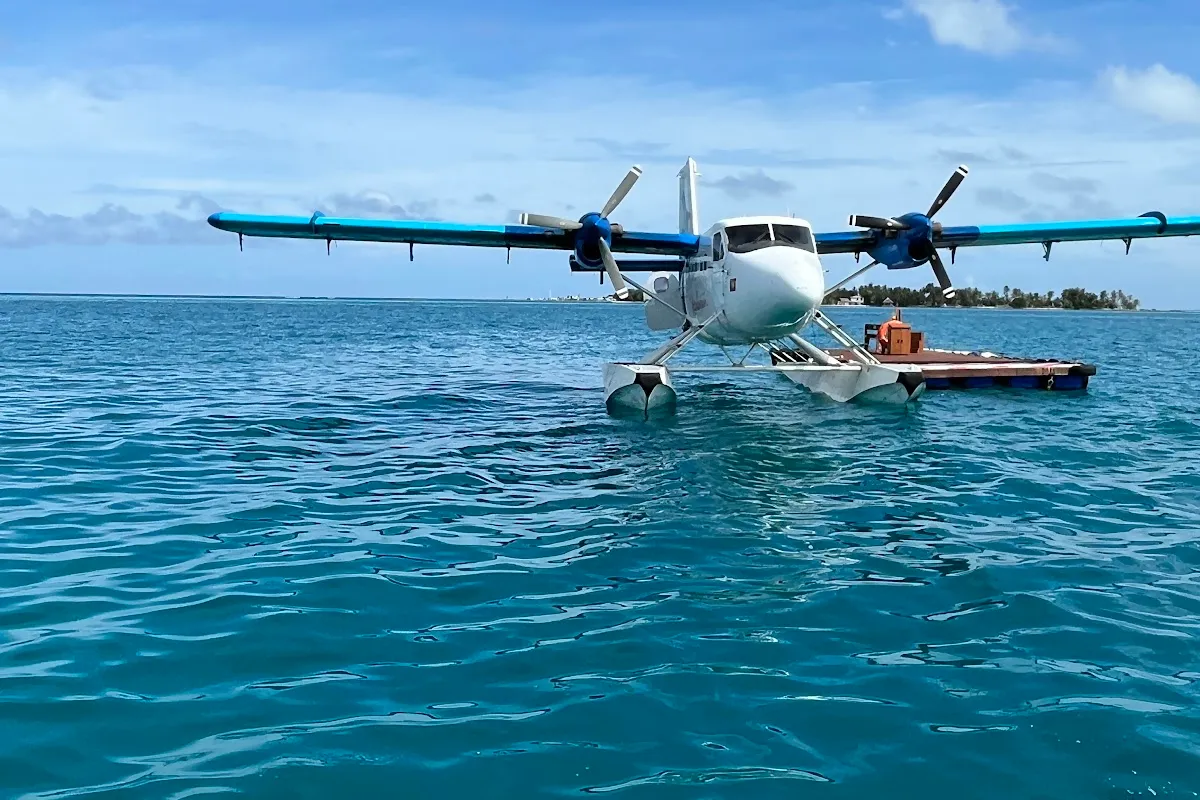
The seaplane transfer is the quintessential Maldivian experience, evoking a sense of romance and adventure. The network is primarily operated by Trans Maldivian Airways (TMA), the world's largest seaplane operator, along with Manta Air. These aircraft, typically De Havilland DHC-6 Twin Otters, are rugged, reliable workhorses capable of landing in the sheltered lagoons of remote atolls.18
The most critical operational constraint of seaplanes is that they operate strictly under Visual Flight Rules (VFR). This dictates that they can only fly during daylight hours, generally defined as 6:00 AM to 4:00 PM.19 This rule has profound implications for international flight planning. If an inbound flight from Australia lands after approximately 3:30 PM, the passenger will miss the final seaplane departure of the day. In this scenario, the traveler is forced to overnight in a hotel in Malé or Hulhumalé and catch the first seaplane the following morning.
This reality makes the Singapore Airlines flight SQ438 (arriving ~10:10 PM) unsuitable for travelers heading to seaplane-exclusive resorts who wish to arrive same-day. Conversely, the morning arrival of SQ432 is perfectly timed to connect with the afternoon seaplane bank.
Seaplanes are small aircraft where weight distribution is critical for safety. Consequently, baggage allowances are significantly stricter than international carriers. The standard allowance is 20kg checked baggage + 5kg hand luggage per person.18 This 25kg total is often a shock to Australians traveling with 30kg checked allowances on full-service airlines.
The enforcement of these limits is notoriously strict. Every bag is weighed at the TMA counter. Excess baggage is charged at a rate of approximately $5.00 USD per kg plus taxes.21 While this fee is often manageable for a few kilograms, it can become substantial for those carrying heavy equipment.
Furthermore, the "hand luggage" concept on a seaplane is different. Standard carry-on wheelie bags are too large for the tiny cabin and will be taken at the steps of the aircraft and placed in the cargo hold. Passengers are advised to carry a small, soft bag or backpack for essentials (passports, phone, medication) that can be held on the lap. Valuable camera gear should be worn or packed in a compact bag to ensure it remains in the cabin, as reports suggest that "wearing" cameras and heavy items is a viable strategy to reduce weighed baggage mass.23
The transfer experience has been elevated with the opening of the Noovilu Seaplane Terminal, a modern facility dedicated to seaplane operations. Upon checking in at the TMA counters in the international arrival zone, guests are shuttled by bus or luxury van to Noovilu. Here, many luxury resorts operate private dedicated lounges where guests can wait in comfort, enjoying refreshments and showers. It is important to note that seaplanes do not run on a fixed schedule like commercial airlines; they operate on a dynamic schedule based on the arrivals of international guests. Wait times can range from 1 to 4 hours.18
4.2 The Speedboat
The 24/7 Connector
Speedboat transfers serve resorts located within the North and South Malé Atolls, typically within a 50-kilometer radius of the airport.
- Operational Flexibility: Unlike seaplanes, speedboats are equipped with navigation systems that allow them to operate 24 hours a day. This makes them the ideal choice for travelers arriving on late-night flights (e.g., from the Middle East or the evening Singapore service). Guests can be cleared through immigration and whisked to their resort—such as Kurumba, Sheraton Full Moon, or Hard Rock Hotel—under the stars, arriving in time for a late nightcap.19
- Cost Efficiency: Speedboat transfers are significantly more affordable, typically ranging from $100 to $300 USD round-trip, compared to the $400–$800 USD commanded by seaplanes.26
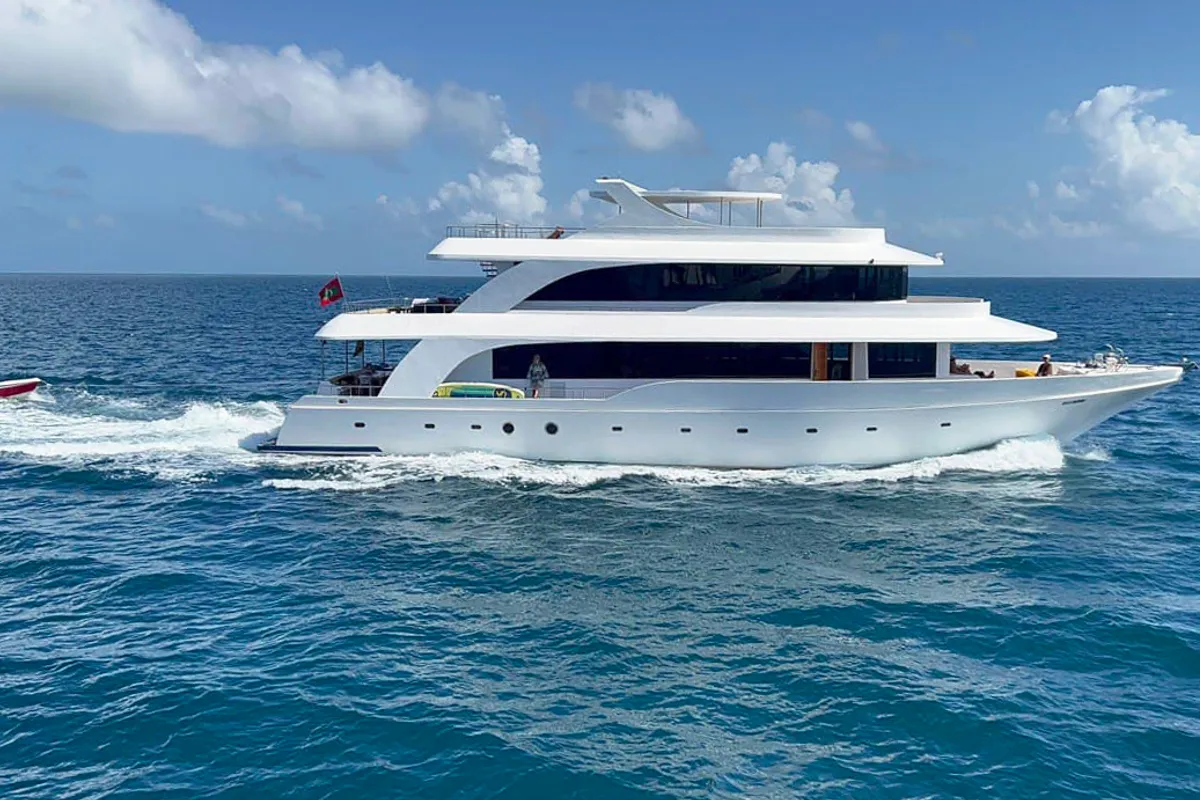
- Comfort Profile: The vessels range from standard Gulf Craft launches to luxury yachts with air-conditioned cabins. While generally comfortable, the crossing can be choppy during the monsoon season, a factor for those prone to seasickness.25
4.3 The Domestic Flight
Bridging the Distance
To reach the furthest reaches of the archipelago—the deep north (Haa Alifu) or the deep south (Gaafu Alifu, Addu)—resorts utilize domestic scheduled flights followed by a short speedboat ride.
- The Network: Operated by Maldivian and FlyMe, these flights utilize Dash-8 and ATR turboprop aircraft. They fly from the Domestic Terminal at MLE to regional airports such as Gan (GAN), Kadhdhoo (KDO), and Kaadedhdhoo (KDM).27
- Night Capabilities: Crucially, domestic airports have runway lighting, allowing for night operations. This provides a "backdoor" for late international arrivals to reach remote resorts like Six Senses Laamu or Ayada Maldives without an overnight stay in Malé, although the total travel time can be exhausting.19
- Luggage: Domestic flights generally offer a standard 20kg–25kg allowance, often more generous than seaplanes but still monitored.28
________________
5. Regional Decentralization
The Rise of Regional Airports
The Maldives is actively pursuing a policy of decentralization, upgrading regional airports to international status to allow for direct access to remote atolls, bypassing the congestion of Malé entirely. This strategy is reshaping the tourism map for 2026.
5.1 Gan International Airport (GAN)
The Southern Gateway
Located in the southernmost Addu Atoll, Gan is a former British RAF base with a rich history and a runway capable of handling wide-body aircraft.
- Strategic Importance: It serves as the hub for the southern atolls. Its status is set to rise significantly with the reopening of the Shangri-La Villingili Resort in late 2026.30
- Connectivity: Currently, SriLankan Airlines operates flights from Colombo to Gan. This allows informed Australian travelers to book a Melbourne-Colombo-Gan itinerary, landing directly in the south and avoiding the domestic transfer from Malé entirely.31
5.2 Hanimaadhoo (HAQ)
The Northern Hub
Hanimaadhoo International Airport serves the northernmost atolls. It is currently undergoing a major expansion project financed by India to extend its runway and build a new terminal.
- Traffic: It currently receives flights from Trivandrum, India, and serves as the gateway for resorts like JA Manafaru. The expansion aims to attract direct charter flights from Europe and potentially Southeast Asia in the future.27
5.3 Maafaru (NMF)
The Billionaire’s Runway
Located in the Noonu Atoll, Maafaru International Airport is a game-changer for high-end tourism. It was specifically designed to accommodate private jets and narrow-body commercial aircraft (A320/B737).
- Clientele: It serves the ultra-luxury clusters of the Noonu Atoll, including Soneva Jani, Cheval Blanc Randheli, and Velaa Private Island.
- Advantage: High-net-worth individuals can land their private jets directly at Maafaru, hopping onto a waiting speedboat to their villa in minutes, ensuring absolute privacy and speed.28
________________
6. Resort Connectivity
Case Studies in Logistics
To illustrate the practical application of these transfer modes, we analyze connectivity across three distinct resort profiles.
6.1 The Speedboat Sanctuary
South Malé Atoll
- Profile: Resorts like Waldorf Astoria Maldives Ithaafushi and Anantara Dhigu.
- Logistics: These resorts utilize high-speed luxury yachts. The transfer time is 30–45 minutes.
- Advantage: The proximity to Malé allows for maximum flexibility. Guests can land at 11:00 PM and be in their villa by midnight. The transfer cost is generally lower, and the "hassle factor" is minimal. It is ideal for families with young children who may not tolerate a secondary flight.26
- Profile: Resorts like Soneva Fushi and Four Seasons Landaa Giraavaru.
- Logistics: A 35-minute seaplane flight north of Malé.
- Experience: The flight offers spectacular views of the coral reefs and sandbanks. However, the daylight restriction means guests must arrive in Malé by 3:00 PM.
- Cost: High transfer fees ($600+ USD) and strict luggage limits apply. This option is for those who view the journey as part of the destination experience.36
- Profile: Ayada Maldives.
- Logistics: This is a multi-stage journey. Guests fly from MLE to Kaadedhdhoo (KDM) (approx. 55 mins) on a domestic flight, followed by a 45-minute speedboat ride across the atoll.37
- Reality: The total transfer time, including waiting for the domestic flight, can exceed 2–3 hours. This "expedition" style travel rewards guests with pristine, uncrowded reefs and some of the best surfing in the country, but it requires stamina. It is best suited for longer stays of 10–14 days rather than a short week.37
6.2 The Seaplane Icon
Baa Atoll (UNESCO Reserve)
6.3 The Deep South Expedition
Gaafu Dhaalu
________________
7. Fiscal Planning
Navigating the 2026/2026 Tax Regime
The cost of a Maldives holiday is increasing, driven not just by inflation but by structural changes in government taxation aimed at environmental conservation and debt management. Australian travelers must budget for these non-negotiable costs.
Effective January 1, 2026, the Maldives Green Tax has increased by 100%.
- New Rates: For resorts, hotels, and tourist vessels (safaris) with more than 50 rooms, the tax has risen from $6 USD to $12 USD per person, per night. For guesthouses on inhabited islands, it has risen from $3 USD to $6 USD.39
- Calculation: The tax is charged for every night stayed. For a family of four (2 adults, 2 children) staying 10 nights at a resort, the Green Tax liability is now $480 USD (approx. AUD 750), a significant line item.
- The Infant Exemption: In a move to support family travel, the government has introduced an exemption for infants under 2 years of age. They are now free from Green Tax liability, a small but welcome relief for new parents.41
- Transition Rules: For stays crossing the New Year (e.g., checking in Dec 28, 2024, checking out Jan 5, 2026), the tax is applied based on the "12-hour rule" for each 24-hour block. If the stay block falls into 2026, the higher rate applies.41
The Tourism Goods and Services Tax (TGST) is legislated to increase from 16% to 17% effective July 1, 2026.42 This tax applies to the entire resort bill: room rates, transfers, spa treatments, diving, and dining.
- Strategic Payment: Travelers booking high-value packages for travel in late 2026 should inquire if paying in full before July 1 locks in the 16% rate. Policies will vary by resort, but prepayment can potentially save hundreds of dollars on a luxury booking.
It is crucial to understand that transfer fees are rarely included in the headline room rate found on booking platforms like Agoda or Booking.com. These mandatory fees are added during the checkout process or charged directly by the resort.
- Budgeting: Always add $1,000–$1,500 AUD to the total holiday budget for a couple to cover seaplane transfers.
- Service Charges: A 10% service charge is universally applied to these transfer fees, compounding the cost.44
________________
8. Strategic Itinerary Planning for Australians
To mitigate the risks of missed connections and expensive overnight stays, Australian travelers should adhere to the "Safe Window" for flight selection:
- Arrival: Aim to land in Malé before 3:00 PM if heading to a seaplane resort. This prioritizes the Singapore Airlines SQ432 or early arrivals from Colombo.
- Departure: For the return journey, book an international flight departing after 9:00 AM. Seaplanes cannot fly passengers from resorts to the airport in the dark (pre-dawn), so an 8:00 AM international departure is risky and often requires a departure from the resort the prior evening.45
For those with unavoidable long layovers (e.g., a 9:00 PM flight after a 4:00 PM seaplane drop-off), utilizing the Hulhule Island Hotel or taking the ferry to Malé City is a viable strategy. Luggage can be stored at the airport 12, allowing for a walking tour of the capital's mosques and markets, or a dinner at a rooftop restaurant in Hulhumalé, transforming "dead time" into a cultural experience.
Given the strict 25kg limit on seaplanes, Australians should pack strategically.
- Heavy Gear: Wear heavy hiking boots or sneakers on the plane.
- Cameras: Carrying a heavy DSLR camera around your neck or in a jacket pocket often bypasses the scale, whereas putting it in a bag ensures it is weighed and charged.23
- Essentials: Pack a change of clothes and swimwear in your hand luggage. Occasionally, if a seaplane is overweight, luggage may be offloaded and sent on the next flight. Having your swimmers ensures the holiday starts immediately, even if your suitcase arrives three hours later.21
________________
9. Conclusion
The 2026 travel landscape for the Maldives presents a compelling proposition for Australians. The opening of Terminal 1 at Velana International Airport removes the historic friction of arrival, replacing humidity and queues with aerobridges and efficiency. While the fiscal environment has tightened with the doubling of the Green Tax and the rise in TGST, the sheer variety of connectivity options—from the premium Singapore corridor to the emerging southern gateway at Gan—empowers the informed traveler to tailor the journey to their specific needs.
By understanding the physics of the transfer network, respecting the daylight constraints of seaplane operations, and budgeting for the new tax regime, Australian travelers can navigate the logistics of the Maldives with the same ease as they navigate the reefs. The archipelago remains a destination of dreams; with this guide, the journey there becomes a reality of precision.
________________
Appendix A: Comparative Data Tables
Table 1: Transfer Mode Operational Matrix
Feature
Speedboat
Seaplane
Domestic Flight
Primary Region
North & South Malé Atolls
Ari, Baa, Lhaviyani, Noonu
Gaafu, Laamu, Addu (Deep South)
Operating Hours
24/7 (Day & Night)
Daylight Only (6 AM - 4 PM)
Day & Night (Schedule dependent)
Baggage Allowance
Standard (No strict limit)
Strict: 20kg Check + 5kg Hand
Standard: 20kg-25kg
Typical Cost (Return)
$100 - $350 USD
$400 - $800 USD
$350 - $550 USD
Wait Time
Minimal (15-45 mins)
Variable (1-4 hours)
Scheduled (Check-in 2 hrs prior)
Vibe
Efficient, sometimes choppy
Scenic, loud, adventurous
Conventional, longer duration
Table 2: Green Tax Cost Implications (2026 Rates)
Scenario: Family of 4 (2 Adults, 1 Child aged 8, 1 Infant aged 1)
Duration
Old Rate ($6/pp)
New Rate 2026 ($12/pp)*
Total Increase
7 Nights
$168 USD
$252 USD
+$84 USD
10 Nights
$240 USD
$360 USD
+$120 USD
14 Nights
$336 USD
$504 USD
+$168 USD
Note: Calculation assumes the infant is exempt under new 2026 rules (3 paying pax vs 4 paying pax previously).
Table 3: Australian Flight Connection Analysis (East Coast)
Route
Airline
Transit Hub
Approx. Total Time
Pros
Cons
SYD/MEL - SIN - MLE
Singapore Airlines
Singapore
16h 00m
Best lounges; reliable timing; day arrival.
Higher price point.
MEL - CMB - MLE
SriLankan Airlines
Colombo
15h 00m
Direct leg from MEL; shortest routing.
Regional instability risks.
SYD/MEL - KUL - MLE
AirAsia
Kuala Lumpur
17h 00m
Lowest cost; good for budget travelers.
Unbundled fares; lower comfort.
SYD - DXB - MLE
Emirates
Dubai
22h 00m
Superior inflight product; Dubai stopover option.
significantly longer travel time.
________________
Report compiled by the Aviation & Destination Analysis Desk for amaldives.com.
Works cited
1. Flights From Sydney to Maldives
SYD – MLE - Club Med, accessed January 21, 2026, https://www.clubmed.com.au/l/flights/sydney/maldives
2. Travelling from Australia to the Maldives, accessed January 21, 2026, https
//www.maldives.com/articles/flights-to-maldives/travelling-from-australia-to-the-maldives
3. Flights From Melbourne to Maldives
MEL – MLE - Club Med, accessed January 21, 2026, https://www.clubmed.com.au/l/flights/melbourne/maldives
4. Velana International Airport - WebFids, accessed January 21, 2026, https
//www.fis.com.mv/
5. Best Flight Routes to the Maldives | Go Ocean, accessed January 21, 2026, https
//gooceantravel.com/best-flight-routes-to-the-maldive/
6. Australia to Maldives Flight Time
Everything You Need to Know, accessed January 21, 2026, https://www.budgetmaldives.com/maldives/how-to-travel-to-maldives-from-australia/
7. Flights to Maldives – Find the Best Deals to Reach Paradise (Expert Guide), accessed January 21, 2026, https
//www.dreamingofmaldives.com/flights-to-maldives/
8. Maldives Flights from US
Best Airlines, Routes & Layover Guides, accessed January 21, 2026, https://maldives-magazine.com/general-info/maldives-flights-from-usa-best-airlines-routes-and-layover-guides.htm
9. Find Cheap Flights to Malé - Google, accessed January 21, 2026, https
//www.google.com/travel/flights/flights-to-male.html?gl=US&hl=en-US
10. Find Cheap Flights from Sydney to Malé (SYD - MLE) - Google, accessed January 21, 2026, https
//www.google.com/travel/flights/flights-from-sydney-to-male.html?gl=AU&hl=en
11. Maldives Direct Flight | Dream by Luxury Escapes, accessed January 21, 2026, https
//luxuryescapes.com/inspiration/maldives-direct-flight/
12. New Velana Airport Terminal Guide 2026
Navigating Male ..., accessed January 21, 2026, https://maldives-magazine.com/general-info/velana-airport-mle.htm
13. Maldives airport guide - Virgin Atlantic, accessed January 21, 2026, https
//www.virginatlantic.com/where-we-fly/asia/maldives/maldives-airport-guide
14. Maldives Visa - Ministry of Foreign Affairs, accessed January 21, 2026, https
//foreign.gov.mv/index.php/en/consular/for-foreigners-visiting-maldives/maldives-visa
15. IMUGA Maldives Arrival Card Guide 2026 | Complete Step-by-Step Instructions, accessed January 21, 2026, https
//maldivesembassy.de/imuga-maldives-arrival-card
16. Tourist Visa - On Arrival - Maldives Immigration, accessed January 21, 2026, https
//www.immigration.gov.mv/visa/tourist-visa
17. Maldives Travel Advisory - Travel.gov - U.S. Department of State, accessed January 21, 2026, https
//travel.state.gov/en/international-travel/travel-advisories/maldives.html
18. The Ultimate Guide to Malé Airport Seaplane Transfers | Check-in ..., accessed January 21, 2026, https
//maldives-magazine.com/general-info/male-airport-seaplane-transfers-guide.htm
19. The Complete Guide to Maldives Transportation Options, accessed January 21, 2026, https
//www.maldivesnomad.com/transport/
20. Choosing the right transfer to your Maldives resort - This Island Life®, accessed January 21, 2026, https
//www.thisislandlife.com/travel/choosing-the-right-transfer-to-your-maldives-resort/
21. Frequently Asked Questions - Trans Maldivian Airways, accessed January 21, 2026, https
//www.transmaldivian.com/faqs/
22. Booking a seaplane in the Maldives
What to expect - Blue Bay Travel, accessed January 21, 2026, https://bluebaytravel.co.uk/blog/2026/09/seaplane-transfer-in-the-maldives/
23. Top 5 Things To Know Before Going To The Maldives, accessed January 21, 2026, https
//www.seekingoursomeday.com/blog/maldives-top-5-things-to-know
24. Maldives Sea Plane Transfers - How does the luggage work exactly?
r/travel - Reddit, accessed January 21, 2026, https://www.reddit.com/r/travel/comments/18zye69/maldives_sea_plane_transfers_how_does_the_luggage/
25. Seaplane vs Speedboat
Maldives Transfer Cost & Guide 2026, accessed January 21, 2026, https://maldives-magazine.com/general-info/seaplane-or-speedboat-decoding-maldives-transfers-for-first-time-visitors.htm
26. The Complete Guide to Speedboat Travel in the Maldives - Racing Across Paradise, accessed January 21, 2026, https
//www.maldivesnomad.com/transport/speedboats/
27. Your guide to airports in the Maldives - Air Charter Service, accessed January 21, 2026, https
//www.aircharterserviceusa.com/about-us/news-features/blog/your-guide-to-airports-in-the-maldives
28. The Complete Guide to Domestic Flights in the Maldives - Island Hopping by Air
Connecting the Scattered Pearls of Paradise, accessed January 21, 2026, https://www.maldivesnomad.com/transport/domestic-flights/
29. accessed January 21, 2026, https
//www.trauminselreisen.de/fileadmin/user_upload/Six_Senses_Laamu_-_Transfer_Information_Brochure_2022.pdf
30. Shangri-La Villingili Resort & Spa to reopen in December 2026 - Hotelier Maldives, accessed January 21, 2026, https
//hoteliermaldives.com/shangri-la-villingili-resort-spa-to-reopen-in-december-2026/
31. Maldives Airports Guide
International & Domestic Travel Hubs, accessed January 21, 2026, https://letsgomaldives.com/blogs/maldives-airports-guide-international-domestic-travel-hubs/
32. Direct (non-stop) flights from Gan Island (GAN) - FlightsFrom.com, accessed January 21, 2026, https
//www.flightsfrom.com/GAN
33. Hanimaadhoo Airport Destinations & Routes | FlyTeam, accessed January 21, 2026, https
//flyteam.jp/en/airport/hanimaadhoo-airport/airline_route
34. How Many Airports Does Maldives Have, accessed January 21, 2026, https
//www.moonrisemaldives.com/blog/1/how-many-airports-does-the-maldives-have-in-2026.html
35. Maldives Resorts by Speedboat, accessed January 21, 2026, https
//www.budgetmaldives.com/maldives-resorts-by-speedboat/
36. Maldives Airport Transfers | Speedboat & Seaplane - Velana to Resorts - DMC Quote, accessed January 21, 2026, https
//dmcquote.com/destinations/maldives/transfers
37. Ayada Maldives - Haydi Maldivlere, accessed January 21, 2026, https
//haydimaldivlere.com/en/ayada-maldives/
38. Ayada Maldives | WEBSITE | Maguhdhuvaa | Maldives, accessed January 21, 2026, https
//ayada.com-maldives.com/
39. Green Tax Revenue to increase by 95% next year - Maldives, accessed January 21, 2026, https
//en.mmtv.mv/211
40. Green Tax - MIRA - Maldives Inland Revenue Authority, accessed January 21, 2026, https
//www.mira.gov.mv/Pages/View/whatisgreentax
41. Changes to Green Tax (Effective 1 January 2026) - britacom, accessed January 21, 2026, https
//www.britacom.org/zt/BRPolicies/Maldives/Booklets/202603/P020260319492431010757.pdf
42. Maldives Tax Guide 2026
Green Tax & GST Updates You Should Know, accessed January 21, 2026, https://letsgomaldives.com/blogs/maldives-tax-guide-2026-green-tax-gst-updates-you-should-know/
43. Discover the New Taxes for Diving Tourists in the Maldives in 2026 - Top Class Cruising, accessed January 21, 2026, https
//www.topclasscruising.com/discover-the-new-taxes-for-diving-tourists-in-the-maldives-in-2026/
44. Maldives Transfers Guide
Seaplane vs Speedboat 2026 - DMC Quote, accessed January 21, 2026, https://dmcquote.com/blog/post/maldives-male-seaplane-transfers-guide
45. How to Get to Six Senses Laamu in the Maldives, accessed January 21, 2026, https
//www.sixsenses.com/en/hotels-resorts/asia-the-pacific/maldives/laamu/destination/how-to-get-there/