
Introduction to South Ari Marine Protected Area (Maamigili)
Nestled within the breathtaking South Ari Atoll, the South Ari Marine Protected Area (SAMPA), often referred to simply as Maamigili, stands as a beacon for marine enthusiasts worldwide. This expansive protected zone, spanning 42 square kilometers (16 square miles) along the seaward fringe of Ari Atoll, is globally celebrated for one extraordinary reason: its unparalleled consistency in whale shark sightings. Unlike many other destinations where encountering these gentle giants is a matter of luck and strict seasonality, SAMPA boasts year-round aggregation of whale sharks, making it a truly unique and reliable hotspot.
Divers and snorkelers travel specifically to this site for the guaranteed opportunity to swim alongside the largest fish in the ocean in their natural habitat. The area is particularly known for its predominantly juvenile male whale shark population, which uses the shallow, nutrient-rich waters for feeding and thermoregulation. This makes for incredible, shallow-water encounters, often between 5-15 meters, accessible to all levels of water enthusiasts.
What makes South Ari Marine Protected Area truly world-class is not just the sheer number of whale shark encounters—with a reported over 95% success rate—but also the commitment to ethical and sustainable tourism. As a designated Marine Protected Area since 2009, strict regulations are in place to ensure the well-being of the whale sharks and the preservation of their delicate ecosystem. Visitors are guided through responsible interaction protocols, fostering a respectful and awe-inspiring experience that prioritizes conservation. Beyond whale sharks, the vibrant reefs of SAMPA teem with diverse marine life, including graceful manta rays, various reef sharks, eagle rays, and sea turtles, offering a complete and unforgettable Maldivian underwater adventure.
Dive Site Overview
Quick Facts
- Location: South Ari Atoll
- Depth: 5-15m (snorkeling focus)
- Current: Mild
- Difficulty: All Levels
- Best Season: Year-round (consistent whale sharks)
What to Expect
Diving and snorkeling at South Ari Marine Protected Area (Maamigili) is primarily focused on encountering whale sharks. The typical experience begins with a boat excursion along the protected southern reefs, where experienced guides and boat crews actively search for whale sharks near the surface. Once a whale shark is sighted, the boats approach cautiously, adhering to strict regulations to minimize disturbance.
For snorkelers, this means a calm entry into the water, often a short distance behind or to the side of the whale shark. The shallow depths of 5-15 meters make these encounters highly accessible and enjoyable for swimmers of all abilities, including families and beginners. The whale sharks in SAMPA are often juvenile males, exhibiting a high level of residency, and are typically found cruising slowly, filter-feeding on plankton. This allows for extended observation periods, sometimes swimming alongside these magnificent creatures for several minutes.
For divers, the experience can vary. While most whale shark encounters here are snorkeling-focused due to the sharks often being near the surface, it is possible to encounter them on scuba during a drift dive along the reef known as Maamigili Beru. However, dedicated whale shark excursions are predominantly snorkeling trips. When diving the reefs within SAMPA, you can expect gentle drift dives along the reef slopes. Entry points are typically from a boat, and descents are usually guided by the current. Navigation is generally straightforward, following the reef contour. Exits are also boat-based, with divers surfacing to be picked up by their vessel. The mild currents ensure a relaxed experience, allowing ample time to observe the diverse reef life.
Pro Tip
For the best visibility and whale shark activity, morning excursions between 8 AM and 11 AM are often recommended. Staying calm and moving quietly in the water will enhance your chances of a prolonged and intimate encounter.
Marine Life at South Ari Marine Protected Area (Maamigili)
The South Ari Marine Protected Area is a thriving ecosystem, boasting an incredible array of marine life, with the whale shark as its undisputed star.
- Whale Sharks: SAMPA is globally significant as a year-round aggregation area for whale sharks (Rhincodon typus), known locally as 'fehurihi'. Over 726 individual whale sharks have been identified within the MPA, with more than 8000 encounters recorded, many showing high site fidelity and returning frequently. Most sightings are of juvenile male whale sharks, which use the shallow areas for feeding and thermoregulation after deep dives. While present year-round, peak encounter rates can occur from May through November when plankton blooms are most abundant. Photography opportunities are exceptional, especially in the clear, shallow waters. Remember to maintain a respectful distance (at least 3 meters from the body and 4 meters from the tail) and avoid flash photography.
- Manta Rays: While whale sharks are the main draw, South Ari Atoll is also a prime location for manta ray encounters. Manta cleaning stations are found within SAMPA, attracting these graceful giants. While manta rays are present year-round in the Maldives, in South Ari Atoll, they are commonly seen. Peak manta season in South Ari can vary, with sightings often reported from May through October on the eastern side of the atoll, and January to May on the western side. However, sites like Rangali Madivaru are known for regular visits by over 30 mantas during the Northeast monsoon. Capturing their elegant movements requires a wide-angle lens and patience.
- Reef Sharks: The coral reefs and channels around Maamigili are home to various reef sharks, including the ubiquitous blacktip and whitetip reef sharks. Grey reef sharks are also commonly sighted, particularly in sites like Fish Head (Mushimasmingili Thila) further north in Ari Atoll, where they gather in significant numbers. These predators add an exciting dynamic to any dive.
- Eagle Rays: These majestic rays with their distinctive spotted patterns are frequent visitors to the South Ari Atoll. They are often seen gracefully gliding in formation over the reef or sandy bottoms. Keep an eye on the blue during your dives for these elegant pelagics.
- Sea Turtles: The Maldives is a haven for sea turtles, hosting five of the world's seven species, including the critically endangered hawksbill and green turtles. They are commonly seen cruising the reefs, resting under ledges, or surfacing for air. South Ari Atoll offers excellent opportunities to observe these ancient mariners.
Pro Tip
To capture the best underwater photographs of whale sharks and manta rays, use a wide-angle lens. Avoid using flash directly on marine life, especially whale sharks, as it can disturb them. Practice good buoyancy to avoid stirring up sand or damaging corals, which can ruin your shot and harm the environment.
When to Dive South Ari Marine Protected Area (Maamigili)
One of the most remarkable aspects of the South Ari Marine Protected Area is its year-round appeal, particularly for whale shark encounters. However, understanding the subtle seasonal variations can enhance your experience.
- Best Months: While whale sharks are consistently present throughout the year, some sources suggest peak encounter rates occur from May through November when plankton blooms are most abundant. Conversely, January to April is also highlighted as a prime time for both whale sharks and manta rays in Ari Atoll, with calmer oceans and excellent visibility.
- Visibility Conditions: Generally, water visibility in South Ari Atoll is excellent, often exceeding 20 meters (65 feet). The period from January to March typically offers the best visibility, with calm seas. During the southwest monsoon (roughly May to November), increased plankton in the water, while attracting filter feeders like whale sharks and manta rays, can slightly reduce visibility.
- Current Patterns: Currents in SAMPA are generally mild, making it suitable for all diver levels. However, as with any atoll, currents can be unpredictable, especially around full and new moons. Dive guides will always assess conditions and plan dives accordingly. The reef geomorphology of the atoll, with shallow areas near steep slopes, induces upwelling that brings nutrient-rich waters, attracting marine life.
- Seasonal Marine Life Calendar:
- Year-round: Whale sharks (consistent sightings)
- January - April: Peak months for calmer weather, best visibility, and strong sightings of both whale sharks and manta rays.
- May - November: Increased plankton blooms, leading to potentially higher whale shark encounter rates, though visibility might be slightly reduced. Manta rays are also frequently sighted during this period.
The South Ari Atoll experiences consistently high temperatures year-round, with average maximums rarely dropping below 28°C (82°F). Sea surface temperatures average around 28°C (82.4°F) in cooler months like January, February, October, and December. The rainy season typically occurs from May to December, with May, September, October, November, and December seeing higher rainfall. However, even during the wet season, sunshine hours remain considerable, and incredible underwater encounters are still very much the norm.
How to Get There
Reaching the South Ari Marine Protected Area (Maamigili) typically involves a combination of international and domestic transfers, given its location in the heart of the Maldives.
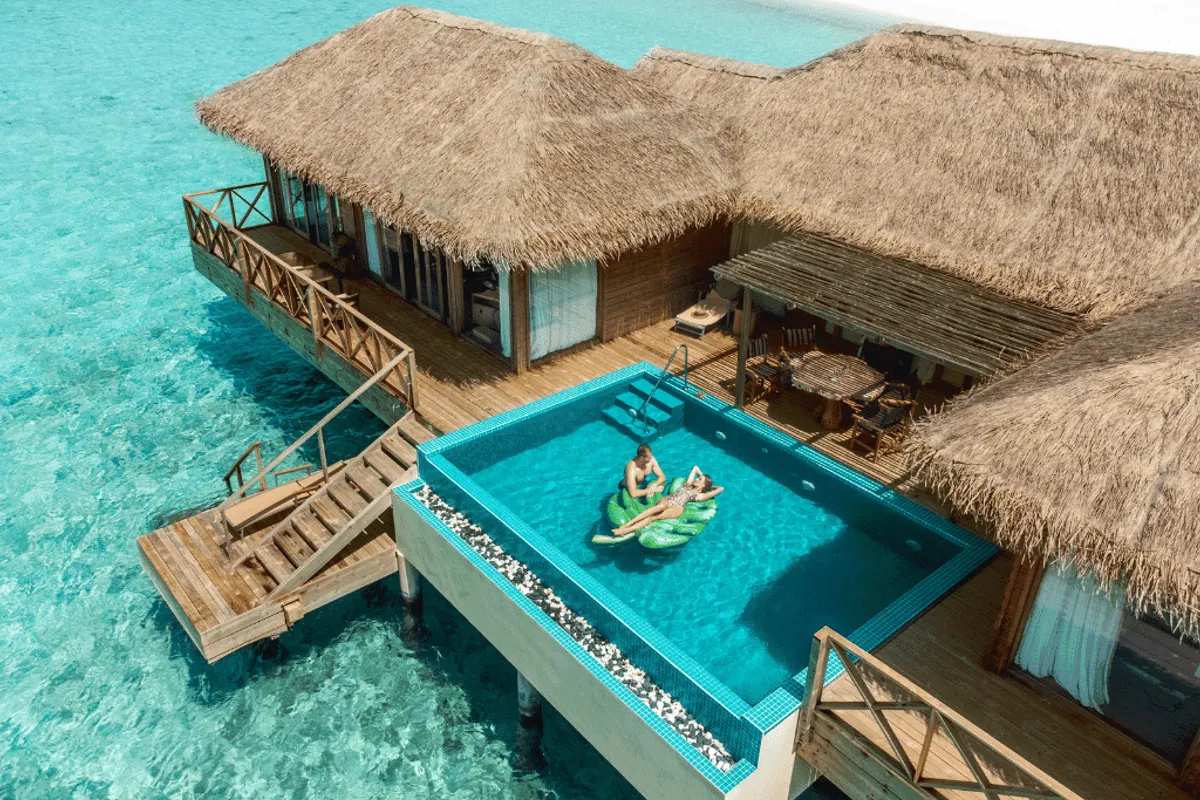
- Nearest Resorts: The convenience of accessing SAMPA is a major draw for guests staying at nearby luxury resorts. These include:
- LUX South Ari Atoll Check Prices for LUX South Ari Atoll→
- Conrad Maldives Check Prices for Conrad Maldives→
- Constance Moofushi Check Prices for Constance Moofushi→
- Lily Beach Check Prices for Lily Beach→
- Transfer Options:
- Seaplane: This is the most common and scenic transfer method from Velana International Airport (MLE) in Malé to South Ari Atoll. Seaplane flights offer breathtaking aerial views of the scattered atolls. The average seaplane flight time to North and South Ari Atoll takes 20 to 30 minutes. Seaplane transfers are usually booked through your resort and can range from $290 to $900 per person roundtrip, depending on the resort's distance and luxury level. Trans Maldivian Airways (TMA) is a major operator.
- Domestic Flight + Speedboat: For some resorts, particularly those with domestic airports nearby, a domestic flight followed by a speedboat transfer might be an option. This can sometimes be a more budget-friendly alternative to a seaplane, though potentially longer.
- Liveaboard Access: Many Maldives liveaboard itineraries prominently feature South Ari Atoll and SAMPA. Liveaboards offer the ultimate flexibility for divers, allowing them to explore multiple dive sites across different atolls without daily transfers. Itineraries often combine South Ari with North and South Malé, Rasdhoo, and Vaavu Atolls. Liveaboards provide unparalleled access to the best diving, often reaching sites before day-trippers. Book Dive Trip→
- Day Trip Possibilities: If you're staying at a resort not directly in South Ari Atoll but within reasonable proximity, day trips to SAMPA for whale shark snorkeling are often available. However, for a truly immersive experience, staying in the atoll or opting for a liveaboard is recommended.
Practical Information
Certification Requirements
Given the shallow nature of many whale shark encounters in South Ari Marine Protected Area, snorkeling is the primary activity. Therefore, no diving certification is required for whale shark snorkeling excursions, making it accessible to virtually everyone who can swim. For those wishing to scuba dive the reefs within SAMPA:
- Minimum Certification Level: A PADI Open Water Diver certification or equivalent is generally sufficient for most reef dives in the area, as currents are typically mild and depths are within recreational limits.
- Experience Recommendations: While suitable for all levels, some drift dives in the Maldives can have unpredictable currents. Having some experience with drift diving or being comfortable in mild currents is beneficial. For Open Water Divers, taking an Advanced Open Water course onboard a liveaboard or at a resort dive center is highly recommended to maximize enjoyment and access to deeper sites.
What to Bring
- Equipment Suggestions:
- Mask, Snorkel, and Fins: Essential for both snorkeling and diving. Many resorts and liveaboards provide rental gear, but personal equipment ensures comfort and fit.
- Wetsuit/Rash Guard: While water temperatures are consistently warm (around 28-30°C / 82-86°F), a 3mm shorty or a rash guard can provide sun protection and a little extra warmth during longer sessions in the water.
- Reef-Safe Sunscreen: Crucial for protecting both your skin and the delicate marine ecosystem. Opt for mineral-based sunscreens that do not contain oxybenzone and octinoxate.
- Hat and Sunglasses: For sun protection on the boat.
- Underwater Camera: Absolutely essential for capturing the incredible marine life.
- Camera Gear Recommendations:
- Wide-Angle Lens: Ideal for capturing the full scale of whale sharks and manta rays.
- Action Camera (e.g., GoPro): Excellent for easy-to-use underwater video and still shots.
- Red Filter/Color Correction: For natural-looking colors at shallow to medium depths without artificial lighting.
- Strobe/Video Lights: If you plan on deeper dives or night dives, these will significantly improve your photography.
- Plenty of Batteries and Memory Cards: You won't want to miss a moment!
Safety Considerations
Safety is paramount in any underwater activity, and South Ari Marine Protected Area has specific guidelines to ensure responsible interactions.
- Whale Shark Interaction Guidelines: The Maldivian government has implemented strict regulations for whale shark encounters. Key provisions include:
- Maintaining a minimum distance of 3 meters from the whale shark's body and 4 meters from its tail.
- Strictly prohibiting touching whale sharks or attempting to hold onto them.
- Approaching calmly and quietly, limiting movement to the sides of the whale shark to avoid chasing or obstructing its natural path.
- Maximum of 10 swimmers per shark (though newer regulations suggest a maximum of 60 people in the water with a whale shark across a maximum of 4 vessels).
- No flash photography, selfie sticks, or bright lights during interactions.
- Feeding of whale sharks is prohibited as it can disrupt their natural filter-feeding behavior.
- Current Awareness: While currents are generally mild, they can change. Always listen to your dive guide's instructions and be aware of your surroundings. Reef hooks can be useful in stronger currents, but only use them on dead coral or rock to avoid damaging the reef.
- Group Diving Protocols: Stick with your guide and group. In the event of separation, follow standard procedures (e.g., look for one minute, then ascend slowly while deploying a safety sausage).
- Emergency Procedures: Ensure you are familiar with the emergency protocols of your dive operator or liveaboard. Carry a personal locator beacon (PLB) or safety sausage (SMB) for open water safety stops or in case of surfacing away from the boat.
Nearby Dive Sites
While South Ari Marine Protected Area is a highlight, the wider South Ari Atoll and neighboring areas offer a wealth of incredible dive sites worth exploring, often included in multi-dive day options or liveaboard itineraries.
- Other sites in South Ari Atoll:
- Maamigili Beru: Often considered part of the whale shark search area, this long drift dive along a fringing reef can also yield whale shark sightings for divers.
- Kudarah Thila: A marine protected area known for its vibrant coral growth and abundant fish life, including snappers, sweetlips, batfish, groupers, whitetip reef sharks, grey reef sharks, and turtles.
- Rangali Madivaru (Manta Point): Famous for its manta ray cleaning stations, especially during the NE monsoon, where numerous mantas gather.
- Fish Head (Mushimasmingili Thila): A renowned marine protected area further north in Ari Atoll, celebrated for frequent encounters with grey reef sharks, as well as humphead wrasse and schooling fish.
- Broken Rock: Unique for its distinctive canyon, which cuts through the reef, offering swim-throughs adorned with soft corals and a variety of reef fish, Napoleon wrasse, and turtles.
- Five Rocks: Another pinnacle dive with interesting topography, including channels and overhangs, home to an array of colorful corals and diverse reef inhabitants.
- Hukuru Elhi Faru (Lion's Head): Known for its stunning coral coverage and excellent night dives for spotting hunting octopus and lobsters.
- Kudhimaa Wreck: An artificial reef teeming with marine life, including lionfish, batfish, triggerfish, and nurse sharks.
- Multi-dive day options: Many dive centers and liveaboards will combine a whale shark encounter in SAMPA with a dive or two at nearby thilas or reefs, offering a diverse day of underwater exploration.
Pro Tips for Diving South Ari Marine Protected Area (Maamigili)
- Insider Knowledge: Engage with your dive guides. They are a wealth of information about recent sightings, current conditions, and whale shark behavior. Many guides in SAMPA are highly experienced in spotting and approaching whale sharks ethically.
- Best Positions for Sightings: When in the water with a whale shark, try to position yourself to the side and slightly behind the shark, allowing it to continue its natural movement without feeling crowded. Avoid swimming directly in front of its head or obstructing its path. Move slowly and calmly.
- Photography Tips:
- Natural Light: The shallow depths mean natural light is often sufficient for stunning wide-angle shots.
- Burst Mode: Whale sharks are constantly moving, so use burst mode on your camera to capture multiple frames and increase your chances of a perfect shot.
- Respectful Distance: Always prioritize the whale shark's well-being over your photo. Stay at least 3-4 meters away.
- Patience is Key: Don't rush your shots. Observe the shark's behavior and wait for the best opportunities.
- Conservation Mindset: Remember you are in a Marine Protected Area. Adhere strictly to all guidelines. Do not touch, chase, or feed the marine life. Your responsible behavior contributes directly to the long-term conservation of this incredible ecosystem. Consider participating in citizen science programs like the Maldives Whale Shark Research Programme (MWSRP) by sharing your photos for identification.
Frequently Asked Questions
Is it guaranteed to see whale sharks in South Ari Marine Protected Area?
While no encounter with wild animals can be 100% guaranteed, the South Ari Marine Protected Area boasts an exceptionally high success rate, often exceeding 95%, for whale shark sightings year-round. It is considered the most reliable place in the Maldives for consistent encounters.
Can I dive with whale sharks in SAMPA, or is it only snorkeling?
While most whale shark encounters in SAMPA are snorkeling-focused due to the sharks often being near the surface, it is possible to encounter them on scuba during a drift dive along the reef. However, dedicated whale shark excursions are predominantly snorkeling trips.
What are the regulations for interacting with whale sharks?
Strict regulations are in place: maintain a minimum distance of 3 meters from the body and 4 meters from the tail, do not touch or hold onto the shark, approach calmly and quietly from the side, and avoid flash photography or obstructing its path. Feeding is strictly prohibited.
What other marine life can I expect to see?
Beyond whale sharks, you can expect to encounter manta rays, various reef sharks (whitetip, blacktip, grey), eagle rays, and several species of sea turtles. The reefs are also home to a vibrant array of reef fish and corals.
What is the best time of day for whale shark encounters?
Morning excursions, typically between 8 AM and 11 AM, often offer the best visibility and increased whale shark activity.
How do I get to South Ari Marine Protected Area?
The most common way is via seaplane transfer from Velana International Airport (MLE) in Malé to a nearby resort in South Ari Atoll, or as part of a liveaboard itinerary that includes the atoll.
Do I need a diving certification to see whale sharks?
No, a diving certification is not required for whale shark snorkeling excursions, making it accessible to all swimmers. For scuba diving on the reefs, an Open Water Diver certification is generally sufficient.
Is South Ari Marine Protected Area suitable for beginner divers?
Yes, with generally mild currents and shallow depths for many sites, SAMPA is suitable for divers of all levels, including beginners. However, some drift dives may require a bit more comfort in currents.
Ready to Book Activity?
Compare prices across top booking platforms and find the best deal for your stay.
Not sure? Compare similar resorts: Kurumba Maldives • Bandos Maldives